
Why Are More People Choosing Polyols ?
Want something sweet but afraid of sugar ? Sugar alcohols may be the answer many consumers are looking for. But sugar alcohols are not "one thing." They are a class of sweeteners. Different sugar alcohols vary widely in sweetness, calories, texture and applications.
What Are Sugar Alcohols ?
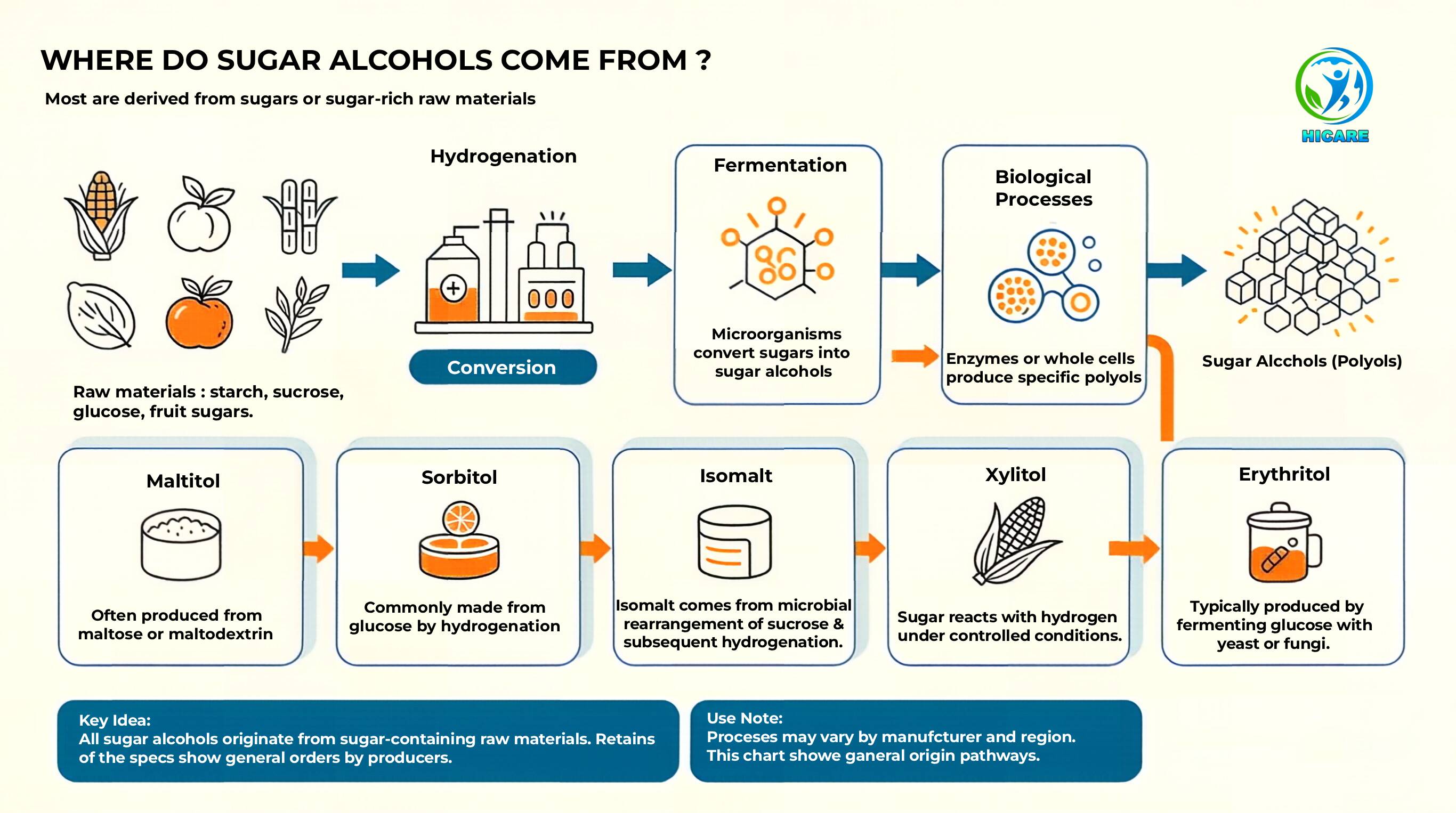
Sugar alcohols are a type of sugar derivative—not sugar and not alcohol. They occur naturally in some fruits, vegetables and fermented foods and are usually produced commercially by reducing starch or sugar.
Their key characteristics :
- Sweet taste, but usually lower in calories than sucrose.
- Low glycemic response; relatively gentle effect on blood sugar.
- Not utilized by oral microorganisms, so they do not easily cause tooth decay.
- Some also offer processing benefits such as humectancy, preventing recrystallization and low hygroscopicity.
The five common ones: Maltitol, Sorbitol, Isomalt, Xylitol and Erythritol.
 Why Do We Need Sugar Alcohols ?
1. Want sweetness, but not the sugar baggage
Cutting sugar does not mean giving up sweetness. Sugar alcohols let people enjoy a treat while managing sugar intake. More than 60% of U.S. consumers pay attention to their sugar intake and three-quarters are actively limiting or avoiding sugar. In Asia, 98% of consumers say health perception of ingredients directly affects purchase decisions.
2. People with diabetes and those managing blood sugar need a sweetener they can feel safe about
Sugar alcohols have a small effect on blood sugar and some are metabolized without insulin, so people with diabetes and those managing blood sugar can still enjoy sweetness.
3. Dental health, especially for parents
Sugar alcohols are not utilized by oral microorganisms and do not cause cavities. Xylitol's cavity-prevention reputation is already well established.
4. Weight management
Erythritol is virtually calorie-free, while maltitol and isomalt have only about half the calories of sucrose. With the rise of GLP-1 weight-loss drugs, 57% of users pay more attention to sugar content and are willing to pay a premium for low-sugar products.
5. Clean-label preference
83% of consumers worldwide are actively reducing sugar and prefer labels such as "natural sweetener" and "no artificial sweeteners." Sugar alcohols come from plant or starch sources, making them more aligned with consumer expectations of "natural" than artificial sweeteners such as aspartame and sucralose.
Applications and Comparison of 5 Sugar Alcohols
| Sugar Alcohol | Sweetness | Calories (kcal/g) | Glycemic Response | Main Applications | Gummy Suitability |
|---|---|---|---|---|---|
| Maltitol | 80-90% | ~2.4 | GI ~35 | Candy, chocolate, gum, baking | ★★★★★ |
| Sorbitol | 50-70% | ~2.6 | Very low | Gummies, baking, personal care | ★★★★☆ |
| Isomalt | 45-60% | ~2.0 | GI ~2 | Hard candy, chocolate, tablets | ★★★☆☆ |
| Xylitol | ≈100% | ~2.4 | Insulin-independent | Gum, chocolate, gummies | ★★★★☆ |
| Erythritol | 60-70% | 0.2-0.4 | GI 0 | Beverages, gummies, chocolate | ★★★★★ |
Remember them in one line each:
- Maltitol: Tastes closest to real sugar; the base sweetener for candy and gummies.
- Sorbitol: The strongest humectant; keeps gummies soft and chewy.
- Isomalt: Least hygroscopic and most stable in processing; a premium choice for hard candy and chocolate.
- Xylitol: Strongest dental-health reputation; the star of chewing gum.
- Erythritol: The zero-calorie name; the "guilt-free sweet" for beverages and gummies.
Implications for a Gummy Product Line
If you are making sugar-alcohol gummies, here is how to pair them:
- Classic sugar-free gummies: Maltitol as the main sweetener; closest to sucrose in taste.
- Zero-calorie gummies: Erythritol as the main sweetener, with maltitol as a supporting sweetener, balancing taste and a zero-calorie label.
- Dental-health gummies: Xylitol + erythritol, targeting parents and children.
- Premium sugar-free gummies: Isomalt + erythritol, highlighting processing stability and a premium feel.
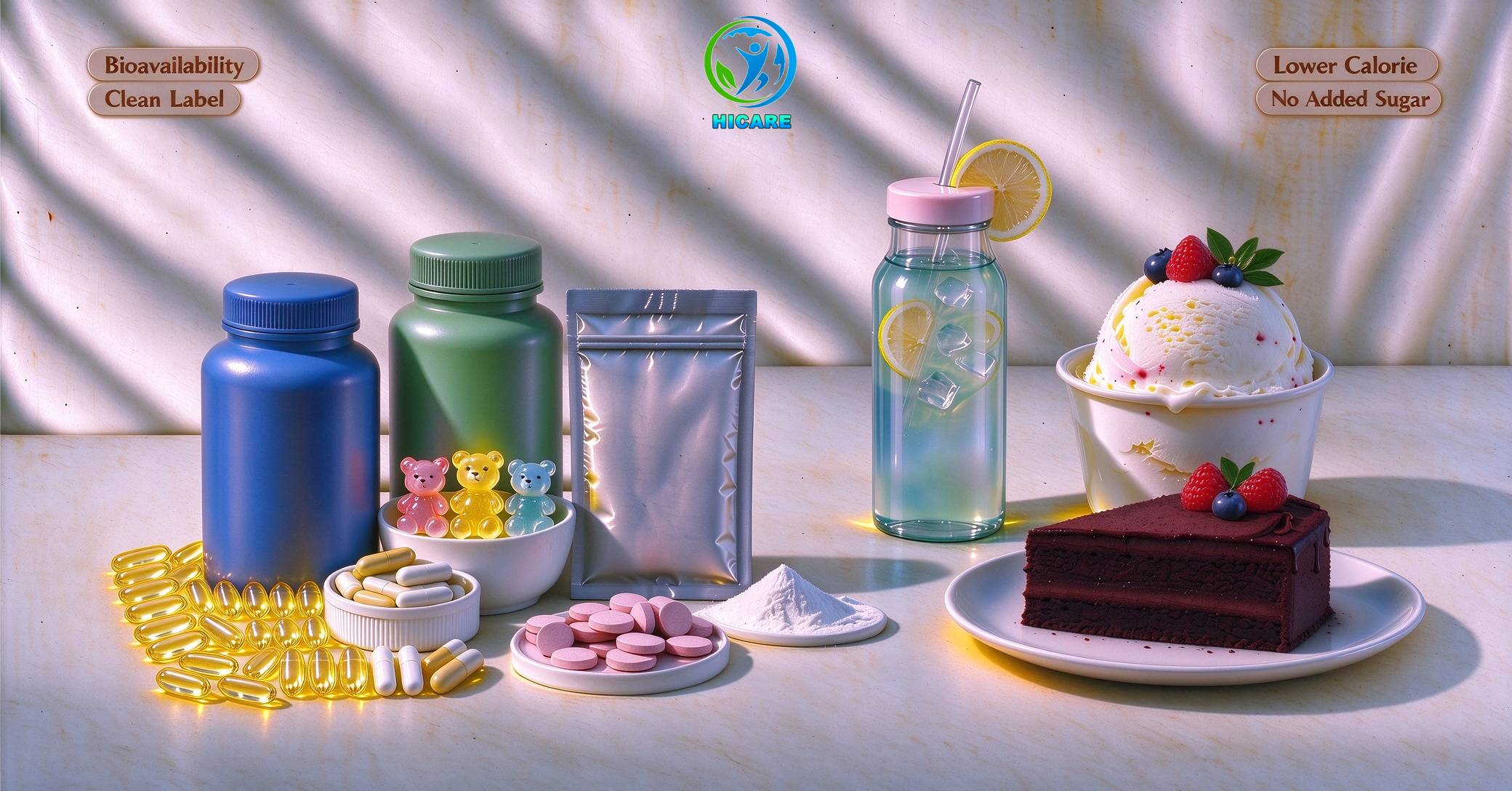
Golden combination: maltitol + erythritol. One handles taste; the other handles the "zero-calorie" claim. It is the safest starting point for sugar-alcohol gummies.